
Security posture assessment
Security posture assessment is considered against your goals, existing systems, timeline and agreed deliverables.
Newly Connects provides managed security services to help your business address specific technical needs within a clear, agreed scope. Identify security gaps and translate them into an actionable improvement plan. Address identity, applications, infrastructure, and response processes with controls appropriate to your environment.
Discuss your requirements ↗☎ Call 223 369 5352Identify security gaps and translate them into an actionable improvement plan.
Start with the outcome you need from managed security services. We work with your team to identify the current constraints, the users affected, and the information required to make a sound implementation decision.
The scope can cover a new initiative, an improvement to an existing environment, or specialist support within a wider program. Deliverables, responsibilities, acceptance criteria, and support expectations are agreed before implementation.
Explore our delivery process →Every engagement starts with the real workflows, users and systems involved. We translate the requirements into practical design decisions, an implementation roadmap, clear acceptance criteria and a maintainable handover.
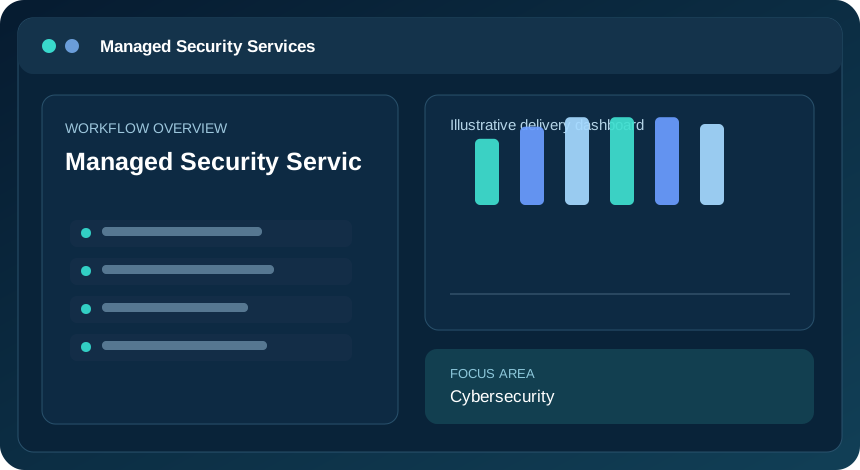
Explore what a managed security services engagement can include, from the initial business problem and user needs to the implementation plan, testing and a supportable release. The scope below is illustrative and tailored to each project.
Security posture assessment is considered against your goals, existing systems, timeline and agreed deliverables.
Threat modeling and risk register is considered against your goals, existing systems, timeline and agreed deliverables.
Identity and access controls is considered against your goals, existing systems, timeline and agreed deliverables.
Testing and remediation roadmap is considered against your goals, existing systems, timeline and agreed deliverables.
Monitoring and incident procedures is considered against your goals, existing systems, timeline and agreed deliverables.
This locally hosted interface illustration is a concept, not a claim about an actual customer project. The final screens, workflows and metrics depend on the project brief.
A practical five-stage workflow adjusted to your objectives, team and delivery model.
Identify the users, success criteria, constraints and decision makers.
Confirm the smallest useful scope and its dependencies.
Review tangible designs and decisions with stakeholders.
Verify quality, accessibility, integration and acceptance criteria.
Document the handover, measure results and agree next priorities.
Choose the elements that fit your project. The final scope is defined during discovery.
Define the objectives, constraints, and evidence needed to move forward.
Translate agreed priorities into specific deliverables and acceptance criteria.
Review work in stages, record decisions, and validate against the agreed scope.
Provide the agreed documentation, operating guidance, and next-step recommendations.
A short description of your goal, the systems involved, any known constraints, and your preferred timeline. Existing documentation or sample workflows help us define the next step.
We begin by reviewing the current architecture, interfaces, permissions, and data requirements. Integration feasibility and any platform limitations are addressed in the proposed scope.
The estimate depends on complexity, integrations, data preparation, review needs, and delivery responsibilities. You receive a proposed scope and engagement model before work begins.
Documentation, training, warranty terms, maintenance, and operational support are defined in the engagement. We can discuss a separate support arrangement where needed.